SDI Training & Relational Intelligence
Relationships are the strength of the organization. Conflict inside teams costs you productivity, and poor coordination between leaders quietly drains momentum from every programme you run. SDI is how we make that visible — and fixable.
A portrait of whole people, not a personality label
The Strength Deployment Inventory — SDI 2.0 — is the foundational relationship intelligence your people use one-to-one, in teams, or across departments to improve their results. We deliver it in partnership with Core Strengths.
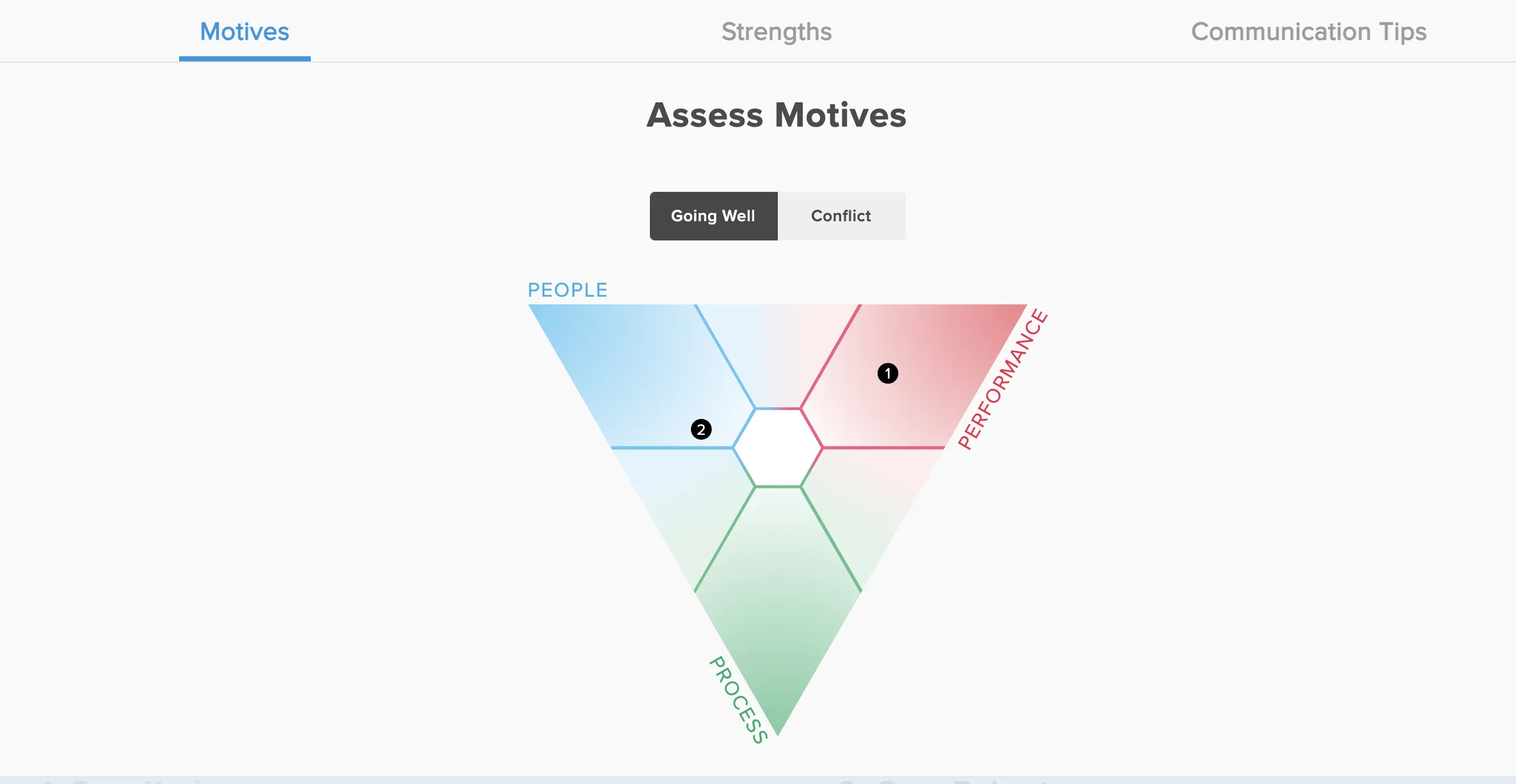
Human behaviour is driven by underlying motives rooted in upbringing and culture. SDI gives you a portrait of the strengths people bring to work, their motives when working with others, and what happens to both under conflict.
Our consultants use it to help team members understand their strengths and their overplayed strengths — which is usually where the friction actually comes from.
 Our SDI delivery partner
The ROI of RQ
Organizations with high Relationship Quotients know how to build indestructible teams. They embrace diversity, navigate conflict, and power through obstacles with smarter, more effective decisions.
Navigate conflict
Data-driven insight into how each person's motives shift through the stages of conflict — so disagreements resolve instead of hardening.
Build empathy
People stop reading a colleague's behaviour as a character flaw once they can see the motive underneath it.
Grow stronger teams
Strengths and overplayed strengths mapped across the whole team, not just assessed individually.
Raise organizational RQ
Relationship Quotient measured at the organizational level, so you can see the change rather than assert it.
An assessment nobody acts on is a report nobody reads
The instrument is the starting point, not the engagement. What changes behaviour is what happens in the weeks after everybody gets their results.
-
Assess
Your leaders and teams complete SDI 2.0. Around fifteen minutes each, online.
-
Debrief
A facilitated session where the team reads its own map together — individually first, then as a group.
-
Apply
Training that turns the insight into how people actually run a meeting, give feedback, and disagree.
-
Check in
Regular scheduled check-ins with our certified consultant team, so the momentum survives the quarter.
Assessments that tell a leader what to work on
SDI shows a team how it relates. These show an individual leader, or the organization as a whole, where the gap actually is.
Leadership Impact Assessment
Comprehensive feedback on a leader's strategies, their impact on others, and the culture they create as a result. Built for executives, key-level managers, and others in strategic leadership positions.
Manager Impact Assessment
Insight into how managers carry out their roles and responsibilities, and the impact they have on the people around them. Designed for managers, project managers, supervisors, and anyone with management responsibility.
Management Effectiveness Profile System (MEPS)
Confidential, in-depth feedback that promotes self-awareness and drives the development of key management skills. Appropriate for lower-middle through upper-level managers.
ACUMEN Leadership WorkStyles
Helps self-motivated leaders strengthen the thinking and behavioural styles that promote their effectiveness. For executives, managers, and leaders who want to realize their full potential.
Comprehensive HR Audit
Whether your HR practice areas, policies, and processes are adequate, legal, and effective. HR audits are a vital means of avoiding the legal and regulatory liability that can arise from HR policy and practice — and they benchmark your people strategy against others in your industry.
Organizational Culture Assessment (OCAI)
The Organizational Culture Assessment Instrument (OCAI, © Kim Cameron) is a validated tool developed by Robert Quinn and Kim Cameron at the University of Michigan, built on the Competing Values Framework — one of the most widely used frameworks in business, applied at over 10,000 companies across 30 years. It takes about 15 minutes online.
Culture influences performance, innovation, agility, engagement, and competitiveness. Research shows a toxic culture decreases productivity by 40%, while an effective culture increases it by 20%, and a positive culture by 30–40%.
Start with one team
Most engagements begin with a single team that isn’t working the way it should. Tell us what you’re seeing — we’ll tell you whether SDI is the right instrument for it, or whether something else would serve you better.
- A straight answer on what SDI will and won’t tell you
- No charge, and no obligation to engage us
- You talk to a senior consultant, not an account rep
- Prefer to talk now? 719-204-3101